
The Attar brand was created specifically for tyres made at the Tengri Tyres plant in Saran, Karaganda Region.
The brand needed a name rooted in Kazakh culture and history that would also work in other markets. Attar means “horses” in Kazakh, and stands for strength and independence.
The Attar logo appears on the sidewall of every tyre made at the plant. It shows the stylised profile of a horse’s head.
Attar stands for freedom, strength and confidence on every journey.

Durable construction for long tread life
thanks to a robust construction

Long tread life
supported by the rubber compound

Precise, responsive handling
delivered by the tread pattern

Fuel efficiency
delivered by road grip and low rolling resistance
Attar tyres provide dependable grip across a wide range of road conditions, thanks to the design of the tread pattern.
Attar tyres are built to handle changing road conditions.
All Attar tyres are made on automated equipment from established suppliers in Europe, China and Japan, and every tyre passes a two-stage quality check. The plant is certified to IATF 16949 and ISO 9001.
Under the Attar brand, tyres are produced for passenger cars, SUVs and crossovers, and for commercial and freight vehicles.
Construction of the Tengri Tyres plant began in 2021. The company adopted the Tengri Tyres name in 2024. Rooted in Turkic tradition, the name conveys strength and the spirit of a winner. Today the plant manufactures tyres in Kazakhstan for the domestic and international markets.
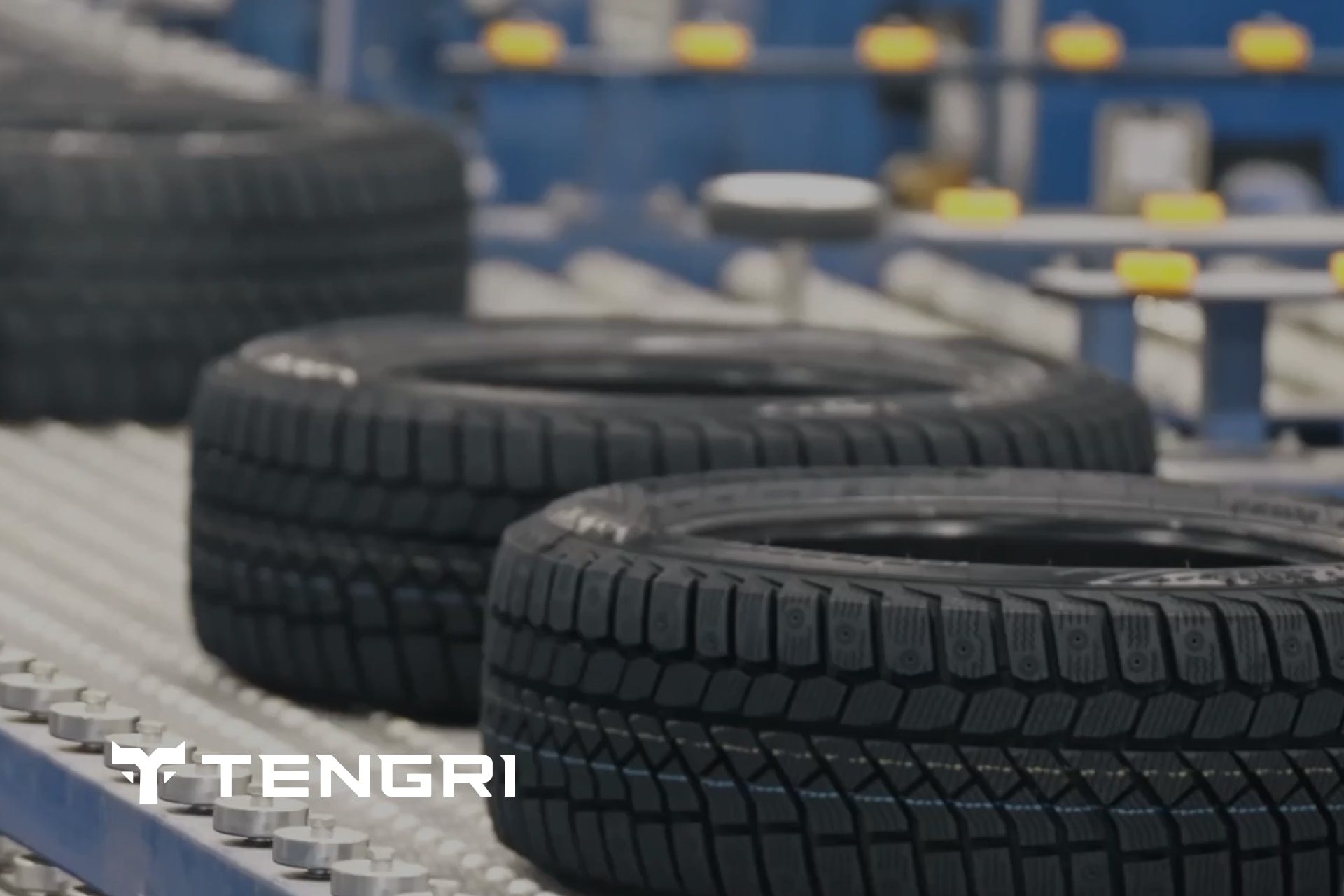
The Tengri Tyres plant covers 106,000 square metres, about the size of 15 football pitches. It uses automated equipment from leading tyre industry suppliers in Europe, China and Japan.
Environmental and industrial safety was a priority in the design of the plant and remains one as it develops. The aim is to meet regulatory requirements and to limit the environmental impact of production.
These technologies support a high level of environmental and workplace safety, while improving energy efficiency and lowering operating costs. The plant’s environmental policies follow the requirements of Kazakh law and draw on the practice of established tyre manufacturers.
Emissions are monitored regularly against the applicable limits.
Environmental responsibility also covers working conditions. An automated control system monitors and manages plant operations.
Our mission is to make reliable tyres that support safe, confident driving across a wide range of road conditions.
Our goal is to grow through forward-looking products, efficient manufacturing, innovation, lower emissions from our operations and investment in our people.
How do I choose the right tyre size?
Follow the tyre size recommended by your vehicle’s manufacturer. You will find it in the vehicle handbook, on a plate inside the door frame, or on the fuel filler flap. When choosing by specification, check the width, aspect ratio, load index and speed rating as well as the diameter.
How can I tell if my tyres are worn and need replacing?
The main indicator is tread depth. Legal minimums differ by country: in the EU and the UK the limit is 1.6 mm for all tyres, while 4 mm is a widely recommended minimum for winter use.
Check the rules where you drive. You can measure depth with a gauge, a coin, or the built-in tread wear indicators (TWI). Also look for cracks, bulges and uneven wear, which can point to problems with wheel balancing, suspension or tyre pressure.
How do I check tyre wear using the built-in tread wear indicator?
"Special markings on the tread let you monitor remaining tread depth, wear evenness, and overall tyre condition.
As the tread depth decreases, the numbers (4, 6, 8) gradually wear away. When only the number 4 remains, the tread has reached a critical level of wear.
On winter tyres, a snowflake symbol acts as the winter wear indicator. Once it has worn away, the tyre no longer provides dependable grip on snow or ice.
On summer tyres, a raindrop symbol acts as the aquaplaning indicator. Once it has worn away, the tyre offers less protection from aquaplaning on wet roads."
How should I store tyres during the off-season?
Store tyres in a dry, cool, dark place, away from direct sunlight and heat sources. Store unmounted tyres upright; tyres on rims should be laid flat or hung.
What do the numbers and letters on the tyre sidewall mean?
The markings on the tyre sidewall contain key information about its parameters and characteristics.
For example, the marking 205/55 R16 91V breaks down as follows:
You may also find on the tyre:
DOT code — the production date (e.g., 2426 means week 24 of 2026)
TWI — tread wear indicator
These markings help you choose the right tyres and use them safely.
What is the load index and how do I determine it?
The load index indicates the maximum load a single tyre can carry at the correct pressure. It's shown on the tyre sidewall as a number, for example 91 in the marking 205/55 R16 91V. The exact load value for each index should be checked against a reference table.
For example:
91 — approximately 615 kg per tyre.
94 — approximately 670 kg.
98 — approximately 750 kg.
When choosing new tyres, it's important to select a load index no lower than the one recommended by your vehicle's manufacturer.
